Galata's first Museum of Folkloric Art was established in the summer of 1990 by the Assistant School Principal at the time Mr. Athanasios Papadopoulou and it was housed in a rented gentrified old inn.
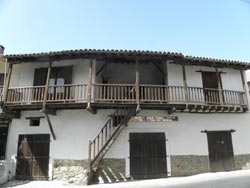
After great efforts, rushing around and visits to many villages and even to Pafos, he managed, supported by the love and contribution of Galata's inhabitants, to create a beautiful Museum that was quite rich in exhibits and one of the first in Cyprus. In record time and with a lot of hard work for three months, the dream of creating a unique museum came true.
The founder of the first Museum declares:
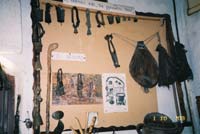 “My ambition was to salvage - as soon as possible - tools, vessels, garments / attires, furniture, kitchenware, and a collection of items of everyday use that were dated back to some other eras… I used to see them being thrown away and abandoned in yards, in gardens, and in semi-ruined houses, being consumed by the rain, the rust, and the all-subduing time. I grieved for them, I felt for them, I wanted to protect them, to take care of them, to repair and maintain them, and to place them in a suitable area so that our souls would kneel before as though they were holy icons.” “My ambition was to salvage - as soon as possible - tools, vessels, garments / attires, furniture, kitchenware, and a collection of items of everyday use that were dated back to some other eras… I used to see them being thrown away and abandoned in yards, in gardens, and in semi-ruined houses, being consumed by the rain, the rust, and the all-subduing time. I grieved for them, I felt for them, I wanted to protect them, to take care of them, to repair and maintain them, and to place them in a suitable area so that our souls would kneel before as though they were holy icons.”
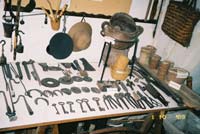
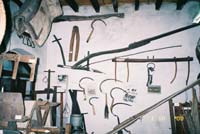
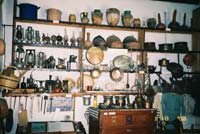 All of the Museum's items, over five hundred of them, are categorised according to the various professions they are related to. Tools and utilities of the shepherd, the farmer, the silk-breeder, the builder, the butcher, the potter, the lumberjack, the wine-shop owner, the shoemaker, and the carpenter. There's a rich collection of attires, a large variety of kitchenware, and various furnishings that you will feel glad to come to and saunter in. All of the Museum's items, over five hundred of them, are categorised according to the various professions they are related to. Tools and utilities of the shepherd, the farmer, the silk-breeder, the builder, the butcher, the potter, the lumberjack, the wine-shop owner, the shoemaker, and the carpenter. There's a rich collection of attires, a large variety of kitchenware, and various furnishings that you will feel glad to come to and saunter in.
The inauguration ceremony of Galata's first Folkloric Art Museum was held by the Minister of Education at the time Mr. Christoforos Christoforou on November 11th, 1990.
 A great benefactor of this Museum was the dearly departed Michalakis Kythreotis, who sponsored it by offering the amount of 2,000 CYP. A great benefactor of this Museum was the dearly departed Michalakis Kythreotis, who sponsored it by offering the amount of 2,000 CYP.
The Museum used to be open in the morning and in the afternoon.
Excerpts from an article by Mr. Lakis Fourouklas in the "Proina Nea" (Morning News) newspaper, September 15th, 1990.
……We will now guide you through the Museum's grounds, its entrance itself predisposing you for what you will see next.
 It was a rather small place that, at first sight, reminded you of a traditional Cypriot house with all the elements co-existing in one single room. It was a rather small place that, at first sight, reminded you of a traditional Cypriot house with all the elements co-existing in one single room.
The entrance was a traditional, wooden, double door made of pinewood while the roof was made of reeds resting on wooden beams.
The walls were whitewashed and the whole prevailing atmosphere reminded one of the old village houses that, as they say, are warm in the winter and cool in the summer.
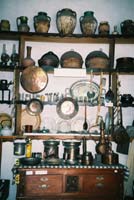 Despite the lack of space, Mr. Papadopoulos had managed to classify the various objects, which were contributions from the village's inhabitants, into unities that at the same time bonded together with a natural harmony. Despite the lack of space, Mr. Papadopoulos had managed to classify the various objects, which were contributions from the village's inhabitants, into unities that at the same time bonded together with a natural harmony.
Upon entering the museum one could face a "Pouaro" (chest of drawers) that dated back to 1925 and on your left there was a teacher's desk dated back to 1915. Above them there were paintings and kitchen utensils, some of them dating back to the previous century and which reminded us of other times.
On the right there were craftily placed traditional Cypriot attires, an old sewing machine, as well as a child's bed made of iron and covered with a white marquisette.
On our left there were all sorts of objects that were considered necessary in the traditional Cypriot house including bread-planks, jugs, wooden shovels, rakes, demijohns for "Zivania" (strong, transparent alcoholic beverage), a loom, and other things.
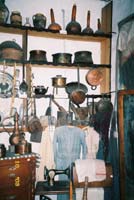 Of course, there were tools like the ones of the shoemaker, the plough, the yoke for the horses, the "adhrakti" (kind of distaff with blades), the silk-breeder's apparatus, the spindle, the spinning wheel, and so many others that marked the life of our country in the beginning of the century. Of course, there were tools like the ones of the shoemaker, the plough, the yoke for the horses, the "adhrakti" (kind of distaff with blades), the silk-breeder's apparatus, the spindle, the spinning wheel, and so many others that marked the life of our country in the beginning of the century.
In December 2013 the Museum of Folkloric Art moved to the privately owned gentrified Primary School of the community, which had in fact been restored for this reason. The building itself is a 1919 construction which consists of three spacious halls.
The exhibits have been classified by officials of the Handcrafts Service according to the profession they are related to and are displayed on special benches, window glass displays and frames.
Currently, the Museum operates during office hours, from 7:30 am until 3:00 pm.
On weekends and public holidays the Museum opens upon communicating with the Community Council.
|